
"There are no superior martial arts, only superior martial artists"

Author: TSMA Page 173 of 200

Fight Life in Ithaca: Saved by The Gentle Art: Rene Nazare

When Rene Nazare-Azvedo was 10 years old, a pack of armed bandits ransacked his home and put a gun to his father’s head. Having captured Nazare’s papa just footsteps away from their home in Teresópolis, Brazil, the nighttime outlaws demanded that he open the locked door to where his wife and sons stood in trembling dread.

A long-time student of capoeira, his father somehow knocked away the .38 pistol from his temple and fended off the others before fleeing inside. Nazare and the others had to then fight to prevent the faceless men from barging their way through the door. Eventually, they gave up and rescinded into the darkness.

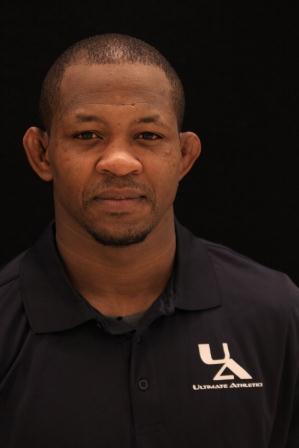
Today Nazare has become a rising MMA fighter with Team Bombsquad and head black belt martial arts instructor at Ultimate Athletics in the Ithaca Mall.

“I can count at least three times when God truly saved me and my family,” he said. “That was the first. The second was when I found jiu-jitsu.”

While Teresópolis is set in Brazil’s mountainous hinterlands, its residents have long fallen into a poverty trap that has led to an upsurge in crime and destitution. It had originally been founded by runaway slaves and indigenous peoples who took refuge in the rainforests surrounded by magnificent towering peaks, such as Dedo de Deus, or “God’s Finger.” It has since grown to a city of more than 150,000.

Nazare described his rough-and-tumble upbringing as being focused on the streets more than in the classrooms, while he hung out with the kind of crowd that produces the same type of hoodlums who had attempted to raid his home.

Alarmed, Nazare’s mother marched into the streets one evening and put the 16-year-old delinquent into a corner. She made him a deal: get off the streets, learn martial arts, and she would support him and pay for everything she could.

“That was the best deal of my life,” Nazare, who decided to take up Brazilian jiu-jitsu rather than his father’s capoeira, recalled. “This is why I train so hard and have fought for everything.”

Jiu-Jitsu Journey

While it started off only with the purchase of a gi, or jiu-jitsu uniform, the bargain came at a cost than more than any of them could imagine. When Nazare’s instructor, Rodrigo “Feijao” Garcia Da Silva, saw that the young man showed early promise, he asked Nazare’s family if Nazare would be willing to move to a Maringá, a city some 15 hours away by automobile.

His father balked at the idea and said he would not allow it. So his wife divorced him. You read that correctly; Nazare’s mother left her long-time husband and moved to a one-room ramshackle home in another rough hood halfway across the country, so that her son could pursue his dream of becoming a jiu-jitsu champion.

“We received support from my coach and my brother, who was a special solider in the Marines,” Nazare said. “When I say we had nothing, I really mean it. My gi was the most expensive thing I owned.”

It did not take long for Nazare to soar in the dojo and in competition under the tutelage of Feijao and the famous Nova Uniao alliance of academies. He went on to win the most prestigious Brazilian jiu-jitsu tournament in the world, known as El Mundials, four times and at each of the major belt ranks — blue, purple, brown and black. He also scored a victory in his first MMA bout and became a BJJ instructor.

After competing in California, Nazare decided to move to Massachusetts, which has a booming population of Brazilians.

“I came to the United States with one gi, two pairs of shorts, two shirts, shoes and a jacket,” Nazare said. “That was about it.”

From there, the man who would become known as the Brazilian Bomber became something of a wandering soul, barely making due as he toiled away in construction gigs, delivery services, and in fish markets cleanups. For two years, his training came to a standstill as he had to hustle just to scrape together enough for decent meals.

After meeting UFC veteran heavyweight, Christian Morecraft, Nazare began to instruct jiu-jitsu again at a gym in Cape Cod and revamped his MMA career. Eventually, Ryan Ciotoli at Team Bombsquad came calling, being in need of a first-class BJJ instructor.

“When Ryan offered me a position, I told him, ‘Let me think about it. Let me check my schedule,’” Nazare recalled. “I was just trying to be tough and hide my excitement. I didn’t have a schedule!”

Ithaca has provided the first stable living and training environment of the Brazilian’s life. Quickly picking up a solid striking game, the lightweight prospect continued his undefeated streak in the cage and earned a contract from the nation’s second largest promotion company, the Bellator Fighting Championships.

Expert coaching continues to improve the BJJ master’s game — he has won several fights by TKO and amassed a respectable 10-2 record.

“I come from BJJ. You will lose in BJJ, and it is the same in MMA,” Nazare noted. “There are many ways to get caught and be humbled but the important thing is to learn from your mistakes, get better and charge ahead.”

He also hopes to build a following of jiu-jitsu students in Ithaca and the surrounding area.

“For the opportunities I have been given I thank God and so many people,” Nazare said. “My mom came and took me out of the streets. Now look where I am.”

Hank’s World: The man with the big heart leaves a big hole

Yes, Don Cardoza was my friend and in some ways, my salvation. But to characterize his April 4 death as merely a personal loss does a great disservice to the man I admired so much.

You’ll see what an impact Don had on SouthCoast by how many people — and how many different types of people — show up Sunday at Dartmouth’s Wellness Resource Center for a “Celebration of Don’s Life.”

Don Cardoza was selfless and caring, his compassion coming from someplace deep in the largest heart I’ve ever known.

“Healing is the noblest work” reads a sign on the wall of the Wellness Resource Center. It is not an empty platitude. It was the No. 1 lesson Don made sure staff and clientele took away from the center he founded in 1986.

I first met Don in 2001 when I interviewed him for “Portraits,” a column I was writing for The Standard-Times. I was instantly struck by his compassion for the sick and those in pain.

I asked him how he came to do what he was doing.

“I was involved in a bad auto accident when I was in my 20s,” Don told me. “Face, back and neck injuries; I was out of action for three years.”

Two things happened during that time, and each was revelatory in its own fashion. He began seeing a chiropractor/massage therapist and saw first-hand how massage was a great pain-management tool. “I saw people besides myself getting pain relief on a regular basis,” he said.

It was also in that three-year period that Don took up martial arts — he eventually became a Black Belt Aikido Master — and the two disciplines provided a powerful recuperative combination, he said.

Don had discovered his life’s work. Healing from the inside, healing from the outside, was a great one-two punch and with wife Carole at his side, Don put it into practice at the WRC where he offered both massage therapy and Aikido — which, appropriately, means “way of harmony.”

Yet, as we talked that day, little did I know that our lives would become inextricably linked less than three years later when, in September of 2004, I had a debilitating stroke.

One of the first faces I remember at the New Bedford Rehabilitation Hospital where I spent two months was Don’s. He came as soon as he heard the news. Having once been a stroke nurse and head of Brandon Woods Rehab unit, he was uniquely qualified to deal with my problems.

I can’t begin to tell you how much of my recovery is due to the ongoing treatment I’ve received from Don and his team starting then and continuing to this day.

What has made his Wellness Resource Center so successful is that Don demanded the same level of caring and dedication from his students as he did from himself. Part of each student’s pledge, post-graduation, was to go forth and perform community service.

For more than a quarter century, the center has provided tens of thousands of hours of service in nursing homes, senior centers, assisted living facilities and churches of all faiths. Working with cancer and AIDS patients, people with ALS, MS and stroke, indeed anyone with chronic pain, Don and his team were “Paying it Forward” long before that concept/movie was even thought of. It’s no accident he was named The Standard-Times Dartmouth Man of the Year in 2001.

But he wasn’t in it for the accolades. Don genuinely cared about people; he wanted to help them heal; he wanted to ease their pain.

Yes, losing Don Cardoza is a tremendous personal loss but his death is much more: It’s a loss for the entire SouthCoast. More than merely a good man, Don Cardoza was a noble man in an often ignoble world.

We are all poorer for his passing.


Taekwondo program brings purpose to at-risk Iqaluit youth

Grandmaster Phap Ken Lu has mentored the Iqaluit taekwondo after-school program since it began two years ago.

A hard-to-reach youth demographic in the North has found a reason to stay in school – and in shape. Taekwondo, the Korean martial art, is expanding rapidly in the North and having a markedly positive effect on at-risk youth as well as the community at large. What’s more, the program has close ties to Ottawa’s taekwondo community.

“As a principal (of an Iqaluit school) I was dealing with a lot of behaviour problems and really just a lack of interest,” said Don Peters, 58, principal of Aqsarniit Middle School. Peters created a taekwondo after-school program two years ago and he has been seeing some encouraging results.

“It has turned around the attendance at the school as well as a lot of the behaviour problems, it’s been a godsend for us,” said Peters.

Grandmaster Phap Ken Lu, 54, is a Canadian taekwondo leader who runs three taekwondo schools in Ottawa. He has mentored the Iqaluit taekwondo experiment since it started. He says the program is successful because it “builds up the trust between the student and the instructor, this way we can help them to achieve their goals, not only in taekwondo but also to improve their schoolwork and behaviour at home.”

According to Lu, taekwondo goes beyond getting kids into shape, it helps build good citizens. “We can guide them on how to exercise, how to focus and learn discipline and at the same time how to respect their elders and carry themselves more confidently in public,” said Lu.

Lu has travelled twice to Iqaluit to award students belts and oversee training. Iqaluit students have journeyed to Ottawa four times for friendship competitions against Lu’s students, which, for these northern youths, is a rare chance to travel and compete in their sport.

The program’s instructors perhaps have the closest Ottawa-Iqaluit connection. They have travelled eight times to receive vital training from Lu’s Ottawa schools that they cannot receive at home.

According to Peters, the program is most effective with “the group of at-risk kids who had no connection to traditional schools, this (program) seemed to give them something to connect with.” Children who wish to participate in the program must attend school during the day and be model citizens in and out of school.

Simply getting children to attend school alone is an impressive accomplishment for the program and is already having a positive effect on the community.

“In the North a lot of the kids come to school because they want to; there is really no pressure from their parents to attend,” said Peters.

But that is not all this program has to offer. “I use to have so many problems with some of the kids that now attend the taekwondo classes, they use to fill up my office because they were fighting in the playgrounds or getting into trouble after school,” said Peters. “We give them a chance and an area where they can get that frustration and extra energy out.”

When Peters, himself a former instructor, moved to Iqaluit to become principal of Aqsarniit, taekwondo was nowhere to be seen. He began teaching the martial art again when Iqaluit resident Maryse Mahy, herself a black belt, talked to him about the possible benefits of an afterschool program. Mahy had been looking to start a taekwondo program in Iqaluit, going so far as enlisting the help of Lu and applying for government grants. Due in large part to the help and training of Lu and the creation of an after-school program by Peters, Mahy realized her goal and the Iqaluit Taekwondo Society was created to spread the sport in the North.

The sport is becoming so popular that they cannot find enough instructors to teach classes. According to Peters, there are 100 students and adults enrolled in his program and the Iqaluit Taekwondo Society can’t keep up with the demand from the community.

“That is a problem for us,” said Peters, “I am running five classes a week. We have one other black belt up here and between the two of us we have to run a lot of classes.” The lack of instructors is not slowing the trend from spreading however. “There are a couple more schools in Iqaluit that want to start a program but we don’t have the instructors to start them up.”

The Iqaluit Taekwondo Society would like to see the sport spread throughout the outlying communities of Nunavut. Ultimately their goal is to spread taekwondo afterschool programs throughout the North and even include the sport in the Arctic Winter Games.

Meet Sensei Louie, Longtime Martial Arts Instructor

The physical and mental benefits of martial arts can last a lifetime, as countless students out there can attest. And as a growing number of Americans begin reaching retirement age, many are looking for new and interesting ways to stay healthy and active.

One instructor who has been working on building a niche among older students is Louis Dibiccari, a Lynnfield resident who has been teaching martial arts for about 50 years. He is currently the owner of Beyond Self Defense in downtown Wakefield.

Dibiccari, or “Sensei Louie” as he is known by many, also teaches students who are as young as 6. He considers himself a somewhat old-fashioned instructor who has students in two-person drills and who only awards one belt a year – and no black belts until a student reaches age 16.

“I really want to teach the kids martial arts – I don’t want to just give them awards,” said Dibiccari, who started his own journey as a martial artist as a 19 year old in Revere. As a 12 year old, Dibiccari said that he suffered from polio and was barely able to move for a couple of months – something that likely motivated him later in life to stay active and athletic and to avoid his local street corners. A little while later, he joined the Army even though he recalls weighing only about 90 pounds at the time. “If the Russians ever saw me, they would have come over the next day,” he joked. Dibiccari also notes that as a boy, he was raised in a home with a sister and a single mother – and his mother didn’t even see him doing martial arts until she was in her 90s.

Since then, the 69-year-old Dibiccari has spent time practicing martial arts in Boston and in San Francisco’s Chinatown under his sensei Patrick McCarthy, who made Dibiccari an eighth-degree black belt. Dibiccari keeps in touch with his sensei, who lives in Australia, via Skype.

Those who do study martial arts with Sensei Louie will typically learn Japanese (Okinawan) arts such as Shotokan and Shorinji that in turn are descended from the original Chinese martial arts developed at the Shaolin Temple. The style taught by Dibiccari’s sensei, McCarthy, is Koryu Uchinadi. The word koryu means “old style karate,” said Dibiccari. The sensei has also been practicing chi gong (also known as Chinese medicine, comparable in some ways to reiki) for 36 years, and he is also well-versed in Tai Chi. He actually got his start as a judo student.

In his latest fitness program geared toward seniors, Dibiccari reports that he has been running about 12 classes a week, and they can come in to the ones they choose. Keeping active remains extremely important as people age, explains DiBiccari, noting that a sizeable percentage of nursing home residents suffer from muscle atrophy.

Classes include breathing and stretching exercises, some balancing, weight lifting, and Tai Chi, and even some line dancing. “They walk out of here feeling really good,” said DiBiccari.


Page 173 of 200

Powered by WordPress & Theme by Anders Norén