"There are no superior martial arts, only superior martial artists"

Category: Uncategorized Page 67 of 76

Maslow’s hierarchy of needs

File:Maslow's Hierarchy of Needs.svg

Maslow’s hierarchy of needs is a theory in psychology, proposed by Abraham Maslow, in his 1943 paper A Theory of Human Motivation.

He studied Superior individuals and formulated the theory of the hierarchy of needs, as shown as this pyramid.  The lower four levels were referred as the Deficiency Needs.  He stated that if these needs were not met, the individual would not feel a strong desire to strive to the higher levels which he called the Being Needs. So perhaps, in our pursuit of  becoming a Superior Martial Artist, we should look to see if our D needs are being met. If not, we shouldn’t wonder why we don’t strive for the higher purpose.

The Tao(ist) of Kung Fu


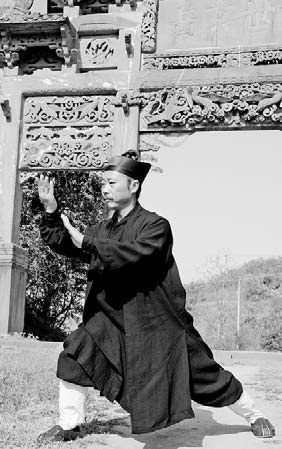
Taoist monk finds his path as he masters martial art 

Kungfu masters enjoy a state of quietness and seldom fight, says Zhong Yunlong. XinLin / China Daily


On a sweltering afternoon, a group of young men in white robes are practicing kung fu in a backyard. A man is hitting another man’s exposed back with a long, thin sandbag. The man who gets beaten never moves and screams each time when the sandbag hits him. His back soon becomes red.

They are all disciples of kung fu master Zhong Yunlong, 47, leader of Wudang’s Sanfengfaction.

“They are practicing how to take beatings. Running away and taking a beating are basic parts of Chinese martial arts, in case one loses a fight,” says Zhong, a bearded man who wears a Taoist hat and black robe.

Zhong has practiced martial arts, including qigong and tai chi, for more than 40 years. He is dedicated to promoting Wudang kung fu.

He started to teach in 1987 and established his own school at the foot of Wudang Mountain in2010.

He recalls that senior Taoist monks had a tradition to teach kung fu at midnight, because they would only pass on the unique kung fu to the most diligent students.

After one day’s study of martial arts, some disciples would get up at midnight and continue to practice.

Although Zhong doesn’t teach his disciples at midnight now, he believes diligence is one of the most important traits for his students.

He plans to train about 30 disciples from impoverished areas, providing free accommodation,food and uniforms.

“Kids from poor families can bear hardships and concentrate more on kung fu. They will teach martial arts fans from home and abroad after two years’ training,” he says.

Zhong believes the study of kung fu is a lifetime pursuit, and it may take 20 years to be a real kung fu master.

“Traditional Chinese kung fu is to attack vital parts, such as the throat. It’s like warcraft: One may lure the enemy to move in a way so that one can attack these parts,” he says.

Zhong says that’s why Taoist kung fu practitioners, who tend to enjoy a state of quietness,seldom fight. However, many kung fu beginners went to Wudang looking for competition when the Taoist temples on the Wudang Mountains reopened to the public in 1984.

Zhong remembers a summer afternoon in 1988, when a man armed with a sword came to the Purple Cloud complex, where Zhong and other disciples lived. As most Taoist monks were taking a nap at that time, he couldn’t find anyone to fight with and began to mutter insults.

Zhong met the man and defeated him within a few minutes.

“I can quickly end a fight, but normally I don’t fight unless it is necessary. Even when I have to, I never use my full strength. We don’t want to hurt others,” he says.

Zhong left his hometown in Hubei province for Jiangxi province to study Chinese boxing at theage of 13.

After watching the box office hit The Shaolin Temple starring Jet Li, he went to the famous Shaolin Temple to study martial arts in 1982.

One year later, he arrived at the Wudang Mountains, learning martial arts from elder Taoist monks and becoming one himself. He also traveled around China to visit other kung fu masters.

“Kung fu students like to learn from each other, no matter which faction we are from. To study kung fu is more about cultivating one’s mind than using it in a fight. I only teach kung fu to those who are really fond of it,” he says.
Tai Chi holds the Qi to stress relief and self-healing

editorial image

Doctor Youzhong Wu’s life revolves around healing – whether in his capacity as a man of medicine or his role as Tai Chi master.


“Healing yourself is the best form of healing,” he says while preparing to deliver his latest class at Derry’s Cultúrlann Uí Chanáin.

He may be a qualified doctor of medicine and a traditional Chinese medical practitioner but Master Youzhong insists that harmonious inner healing – both emotional and physical – can best be achieved over time through the practice of the martial art of Tai Chi Chuan and the Chinese philosophy of Qigong.

Tai Chi Chuan has boomed in popularity in the West in recent decades and there are many interpretations of the martial art. There are those who cover the full curriculum of the art which can even include the use of weapons. However, there are also those who are predominately interested in developing the health aspects of Tai Chi and Master Youzhong’s Derry class falls into this category. His teaching concentrates a lot on the hand form, Qigong exercises and meditation.

Master Youzhong, who introduces himself as ‘John’, believes that the harmony and synchronisation of body and mind is key to outer strength and happiness in life.

“Of course if someone needs an operation then I’ll recommend that but the best way to health is always through self healing. A person must first ask why they are ill – it’s because the mind and body are in conflict and as a result he or she is not as strong as they should be.”

Such unsynchronised working of the mind and body is common amid the often unachievable demands of modern living, according to the Master Youzhong.

“If you want more things all the time then you always think about them and how to obtain them, leaving no time for your body. If we become more worried about the things we want it can stimulate disorder in the brain, causing stress and that manifests itself as physical illness.

“Lifestyle changes such as divorce or unemployment can also stimulate stress and anxiety and the mind can influence the body, weakening it and hurting it. For example a sportsman in a gym may believe he should be progressing better and move directly from lifting a 10kg weight to a 20kg weight but his body is not prepared for that and he hurts himself. Instead he should prepare his body by moving slowly over time [days or even weeks] from 10kg to 11kg to 12kg and so on until he can lift 20kg without hurting his body.

“Another example could be someone losing their job without warning – they are not prepared for it and it can cause deep emotional hurt. But with advance notice and government assistance with money the pain is lessened because the person is better prepared for being out of work.”

Dr Youzhong explains that Tai Chi and Qigong are about preparing the mind and body generally so that they work in harmony to lower the potential anxiety caused by the shocks life can throw up. “It’s about preparing everyday, changing a little bit everyday and in the long term changing a lot about yourself, you can even change your perspective on life. Of course there are many choices people can make to become more positive in life such as give up smoking, gambling, excessive drinking and doing more exercise but to prepare your body and mind it’s important to have a balance between physical and emotional health.”

He believes there are two ways to do this: Passive – by seeking treatment by a medical practitioner; or Active – self-treatment through activities such as Tai Chi and Qigong.

“Tai Chi and Qigong are about empowering people to treat themselves – in fact people can depend 50% on themselves to cure themselves. That may sound confusing to some as I run a clinic myself but then all that I can do in a clinic is give patients some stimulus to heal their body and mind such as acupuncture or acupressure – they can’t afford to come to the clinic everyday so I always encourage patients to join my class.”

Master Youzhong explains that Tai Chi is a “moving meditation” which gives people the ability to calm down. “Everyone has that ability but they have to work on it. When you calm down there is no disorder inside the brain and so bodily functions are freed up to work as normal – in this way it shows life’s self-fixing and strengthening function by balancing the workings of the body.”

The martial artist admits that Tai Chi and Qigong are not miracle cures but that the benefits are far reaching. He adds that patients’ abilities to heal themselves “differs with age” but that everyone can feel better as a result of practising Tai Chi and Qigong.

He explains: “Martial arts are mostly for fighting but Tai Chi is much more slow than other forms. If you can move slowly you prepare your body and mind better to create calm. Also when you move slowly you can’t hurt yourself as it allows time to prepare for the next movement. In that way it prepares your body for faster movements and helps protect from injury.”

The first, and most familiar, aspect of Tai Chi Chuan is the Hand Form. This is the series of slow movements you see performed publicly on TV and movies in the parks of China and of course in Derry. Master Youzhong also holds an outdoor weekly class in Coleraine.

Master Youzhong’s Tai Chi class is held weekly on Mondays from 6.30pm at Cultúrlann Uí Chanáin, Great James Street, Derry. Anyone interested is invited to come along for tasters of the martial art of Tai Chi and the philosophy of Qigong.


What is Tai Chi

Tai Chi Chuan does not fit neatly into the Western idea of exercise because of its slow nature. To understand the benefits it is good to have a knowledge of the concept of Qi energy. Traditional Chinese medicine (TCM), which is believed to be over 2,000 years old, also has, at its roots, the principles of Yin and Yang. It is believed that there are meridians or pathways which travel through the body carrying Qi energy. If there is a problem, or imbalance in the flow of Qi energy, a TCM doctor would use acupuncture needles, or perhaps acupressure – the use of thumbs or hands, to stimulate acupoints and release the blockages.

Tai Chi Chuan and more directly, Qigong promotes the smooth flow of this Qi energy. By performing the postures of the form, in co-ordination with relaxed, natural breathing and the application of Yi, which is the intent or focus of the mind, practitioners help to keep the Qi moving smoothly through the channels. Aside from promoting the flow of Qi energy, Tai Chi Chuan is also said to help to increase flexibility, muscle suppleness, aid relaxation and help to keep the mind calm and focused.


Inspirational Quotes


Here are some  inspirational quotes. Maybe you can find one that speaks to you.

It is not the critic who counts, not the man who points out how the strong man stumbled, or where the doer of deeds could have done better. The credit belongs to the man who is actually in the arena; whose face is marred by the dust and sweat and blood; who strives valiantly; who errs and comes short again and again; who knows the great enthusiasms, the great devotions and spends himself in a worthy cause; who at the best, knows in the end the triumph of high achievement, and who, at worst, if he fails, at least fails while daring greatly; so that his place shall never be with those cold and timid souls who know neither victory nor defeat.

“The Man In the Arena” is a passage from “Citizenship in a Republic” — a speech given by the former President of the United States, Theodore Roosevelt at the Sorbonne in Paris, France on April 23, 1910.
We are all inventors, each sailing out on a voyage of discovery, guided each by a private chart, of which there is no duplicate. The world is all gates, all opportunities.

Ralph Waldo Emerson

We are what we repeatedly do. Excellence, therefore,
is not an act but a habit.
Aristotle

Nothing will ever be attempted if all possible objections must first be overcome.
Samuel Johnson

Our greatest glory is not in never falling but in rising every time we fall.
Confucius

Great spirits have always encountered violent opposition from mediocre minds.
Albert Einstein

Life is like a game of cards. The hand that is dealt you represents determinism; the way you play it is free will.
Jawaharal Nehru

Knowing is not enough; we must apply.
Willing is not enough; we must do.
Johann Wolfgang von Goethe

After the game,
the king and the pawn go into the same box.
Italian Proverb

One way to get the most out of life is
to look upon it as an adventure.
William Feather

Go confidently in the direction of your dreams. Live the life you have imagined.
Henry David Thoreau

All men dream but not equally. Those who dream by night in the dusty recesses of their minds wake in the day to find that it was vanity; but the dreamers of the day are dangerous men, for they may act their dream with open eyes to make it possible.
T.E. Lawrence

So often times it happens that we live our lives in chains
And we never even know we have the key.
Lyrics from Already Gone, peformed by the Eagles for their 1974 On the Border album

Try not to become a man of success but a man of value.
Albert Einstein

What does not destroy me, makes me stronger.

Friedrich Nietzsche


Page 67 of 76

Powered by WordPress & Theme by Anders Norén