The Superior Martial Artist

"There are no superior martial arts, only superior martial artists"

The Benefits of Martial Arts Training for Children

By Ken Ducote
Part I  The Benefits of Martial Arts Training for Children and the most appropriate age to start.

Did you know that martial arts training is safer than most school sports for children?  Research has shown that kids are injured less in a well supervised dojo/ dojang than on a football foeld, basketball court or baseball diamond.  But that is not the only benefit to martial arts for kids.    For starters, martial arts training gives the student an arena of self-discovery and a chance for he or she to set reasonable and obtainable goals for themselves.  Studies show that in most cases, martial arts training increases the child’s self esteem, as well as the ability to focus and concentrate on tasks at hand.  Martial Arts also help with coordination and motor skills in children who might seem or feel out of place in another area of physical activity.  Many parents with children diagnosed with ADD or ADHD, report that their child’s success in school and social settings improve after some time in the martial arts due to the dicipline and concentration, as well as the structure required in a well run dojo/dojang with certified instructor’s experienced in teaching children.  This benefit, as well as the the benifit one gets in the area of respect, both for self and others, flows over into other areas of the child’s lofe both on and off the mat.

Some parents may think that martial arts training promotes violence.  They have watched the “Karate Kid” too much.  In a traditional, well supervised dojo/dojang with the proper certified instructor’s, the martial arts acyually foster self dicipline, and socialization skills, which allow them to often walk away from a “bad” situation or at least be aware of it and not let themselves get involved.  If taught traditional aspects of honor and integrity, they have nothing to prove.  Using physical combat would be their last resort in self protection or protection of another who is weaker and bullied.

Dr Mimi Johnson of the American Academy of Pediatrics’ Committee on Sports Medicine and Fitness, says that, Age six is usually a good age to start class.”  By this time the children have developed enough coordination and muscle control to function properly in class and socialize with other as well as have the desire to please the instructor.  I know many will disagree, because schools to accept children as early as age three, but the research stands.  We have tried ages 4and 5 and what we got was Roomper Room.  Our Little Dragons program is from ages 6-10.  At ten they graduate into the aduly class as novice, but with a well grounded foundation.  This is for Taekwondo.  We do not start young people in Hapkido until age 12-14 depending on maturity and body structure since these techniques have no “sport” application and are taught for defense only.

Instructors should be Black Belts with a desire to work with children and a willingness to study early childhood behavior.  Being a Black Belt is simply not enough.  They should also be certified by their alliance as instructors and when necessary be firm, but kind.  On the other side of the coin they should the encouraging and pastoral as well.  The World Taekwondo Federation sets the age for a first degree black belt at 15.  It takes more than the ability to “Parrot” movements as an instructor.  As true, mature Black Belt, understands martial arts philosophy and well as combat or sport skills.  The instructor should be a role model for the child.  It is in the modeling, that the psychologist Bandura explains, that the child learn and grows to mimic what has been presented.  Remember, the child before you today, is the future of tomorrow.
Do Not Go Gentle Into That Good Night

For all of us older martial artists.

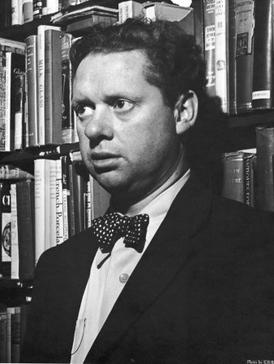
A poem by Dylan Thomas:

Do not go gentle into that good night,
Old age should burn and rave at close of day;
Rage, rage against the dying of the light.

Though wise men at their end know dark is right,
Because their words had forked no lightning they
Do not go gentle into that good night.

Good men, the last wave by, crying how bright
Their frail deeds might have danced in a green bay,
Rage, rage against the dying of the light.

Wild men who caught and sang the sun in flight,
And learn, too late, they grieved it on its way,
Do not go gentle into that good night.

Grave men, near death, who see with blinding sight
Blind eyes could blaze like meteors and be gay,
Rage, rage against the dying of the light.

And you, my father, there on that sad height,
Curse, bless, me now with your fierce tears, I pray.
Do not go gentle into that good night.
Rage, rage against the dying of the light.

Fight Life in Ithaca: Saved by The Gentle Art: Rene Nazare

When Rene Nazare-Azvedo was 10 years old, a pack of armed bandits ransacked his home and put a gun to his father’s head. Having captured Nazare’s papa just footsteps away from their home in Teresópolis, Brazil, the nighttime outlaws demanded that he open the locked door to where his wife and sons stood in trembling dread.

A long-time student of capoeira, his father somehow knocked away the .38 pistol from his temple and fended off the others before fleeing inside. Nazare and the others had to then fight to prevent the faceless men from barging their way through the door. Eventually, they gave up and rescinded into the darkness.

Today Nazare has become a rising MMA fighter with Team Bombsquad and head black belt martial arts instructor at Ultimate Athletics in the Ithaca Mall.

“I can count at least three times when God truly saved me and my family,” he said. “That was the first. The second was when I found jiu-jitsu.”

While Teresópolis is set in Brazil’s mountainous hinterlands, its residents have long fallen into a poverty trap that has led to an upsurge in crime and destitution. It had originally been founded by runaway slaves and indigenous peoples who took refuge in the rainforests surrounded by magnificent towering peaks, such as Dedo de Deus, or “God’s Finger.” It has since grown to a city of more than 150,000.

Nazare described his rough-and-tumble upbringing as being focused on the streets more than in the classrooms, while he hung out with the kind of crowd that produces the same type of hoodlums who had attempted to raid his home.

Alarmed, Nazare’s mother marched into the streets one evening and put the 16-year-old delinquent into a corner. She made him a deal: get off the streets, learn martial arts, and she would support him and pay for everything she could.

“That was the best deal of my life,” Nazare, who decided to take up Brazilian jiu-jitsu rather than his father’s capoeira, recalled. “This is why I train so hard and have fought for everything.”

Jiu-Jitsu Journey

While it started off only with the purchase of a gi, or jiu-jitsu uniform, the bargain came at a cost than more than any of them could imagine. When Nazare’s instructor, Rodrigo “Feijao” Garcia Da Silva, saw that the young man showed early promise, he asked Nazare’s family if Nazare would be willing to move to a Maringá, a city some 15 hours away by automobile.

His father balked at the idea and said he would not allow it. So his wife divorced him. You read that correctly; Nazare’s mother left her long-time husband and moved to a one-room ramshackle home in another rough hood halfway across the country, so that her son could pursue his dream of becoming a jiu-jitsu champion.

“We received support from my coach and my brother, who was a special solider in the Marines,” Nazare said. “When I say we had nothing, I really mean it. My gi was the most expensive thing I owned.”

It did not take long for Nazare to soar in the dojo and in competition under the tutelage of Feijao and the famous Nova Uniao alliance of academies. He went on to win the most prestigious Brazilian jiu-jitsu tournament in the world, known as El Mundials, four times and at each of the major belt ranks — blue, purple, brown and black. He also scored a victory in his first MMA bout and became a BJJ instructor.

After competing in California, Nazare decided to move to Massachusetts, which has a booming population of Brazilians.

“I came to the United States with one gi, two pairs of shorts, two shirts, shoes and a jacket,” Nazare said. “That was about it.”

From there, the man who would become known as the Brazilian Bomber became something of a wandering soul, barely making due as he toiled away in construction gigs, delivery services, and in fish markets cleanups. For two years, his training came to a standstill as he had to hustle just to scrape together enough for decent meals.

After meeting UFC veteran heavyweight, Christian Morecraft, Nazare began to instruct jiu-jitsu again at a gym in Cape Cod and revamped his MMA career. Eventually, Ryan Ciotoli at Team Bombsquad came calling, being in need of a first-class BJJ instructor.

“When Ryan offered me a position, I told him, ‘Let me think about it. Let me check my schedule,’” Nazare recalled. “I was just trying to be tough and hide my excitement. I didn’t have a schedule!”

Ithaca has provided the first stable living and training environment of the Brazilian’s life. Quickly picking up a solid striking game, the lightweight prospect continued his undefeated streak in the cage and earned a contract from the nation’s second largest promotion company, the Bellator Fighting Championships.

Expert coaching continues to improve the BJJ master’s game — he has won several fights by TKO and amassed a respectable 10-2 record.

“I come from BJJ. You will lose in BJJ, and it is the same in MMA,” Nazare noted. “There are many ways to get caught and be humbled but the important thing is to learn from your mistakes, get better and charge ahead.”

He also hopes to build a following of jiu-jitsu students in Ithaca and the surrounding area.

“For the opportunities I have been given I thank God and so many people,” Nazare said. “My mom came and took me out of the streets. Now look where I am.”

Hank’s World: The man with the big heart leaves a big hole

Yes, Don Cardoza was my friend and in some ways, my salvation. But to characterize his April 4 death as merely a personal loss does a great disservice to the man I admired so much.

You’ll see what an impact Don had on SouthCoast by how many people — and how many different types of people — show up Sunday at Dartmouth’s Wellness Resource Center for a “Celebration of Don’s Life.”

Don Cardoza was selfless and caring, his compassion coming from someplace deep in the largest heart I’ve ever known.

“Healing is the noblest work” reads a sign on the wall of the Wellness Resource Center. It is not an empty platitude. It was the No. 1 lesson Don made sure staff and clientele took away from the center he founded in 1986.

I first met Don in 2001 when I interviewed him for “Portraits,” a column I was writing for The Standard-Times. I was instantly struck by his compassion for the sick and those in pain.

I asked him how he came to do what he was doing.

“I was involved in a bad auto accident when I was in my 20s,” Don told me. “Face, back and neck injuries; I was out of action for three years.”

Two things happened during that time, and each was revelatory in its own fashion. He began seeing a chiropractor/massage therapist and saw first-hand how massage was a great pain-management tool. “I saw people besides myself getting pain relief on a regular basis,” he said.

It was also in that three-year period that Don took up martial arts — he eventually became a Black Belt Aikido Master — and the two disciplines provided a powerful recuperative combination, he said.

Don had discovered his life’s work. Healing from the inside, healing from the outside, was a great one-two punch and with wife Carole at his side, Don put it into practice at the WRC where he offered both massage therapy and Aikido — which, appropriately, means “way of harmony.”

Yet, as we talked that day, little did I know that our lives would become inextricably linked less than three years later when, in September of 2004, I had a debilitating stroke.

One of the first faces I remember at the New Bedford Rehabilitation Hospital where I spent two months was Don’s. He came as soon as he heard the news. Having once been a stroke nurse and head of Brandon Woods Rehab unit, he was uniquely qualified to deal with my problems.

I can’t begin to tell you how much of my recovery is due to the ongoing treatment I’ve received from Don and his team starting then and continuing to this day.

What has made his Wellness Resource Center so successful is that Don demanded the same level of caring and dedication from his students as he did from himself. Part of each student’s pledge, post-graduation, was to go forth and perform community service.

For more than a quarter century, the center has provided tens of thousands of hours of service in nursing homes, senior centers, assisted living facilities and churches of all faiths. Working with cancer and AIDS patients, people with ALS, MS and stroke, indeed anyone with chronic pain, Don and his team were “Paying it Forward” long before that concept/movie was even thought of. It’s no accident he was named The Standard-Times Dartmouth Man of the Year in 2001.

But he wasn’t in it for the accolades. Don genuinely cared about people; he wanted to help them heal; he wanted to ease their pain.

Yes, losing Don Cardoza is a tremendous personal loss but his death is much more: It’s a loss for the entire SouthCoast. More than merely a good man, Don Cardoza was a noble man in an often ignoble world.

We are all poorer for his passing.


Page 174 of 202

Powered by WordPress & Theme by Anders Norén